Groundloom
Trust, built into every AI answer.

About
Groundloom is a stealth AI company building a platform that helps teams configure, test, and monitor reliable AI systems at scale.
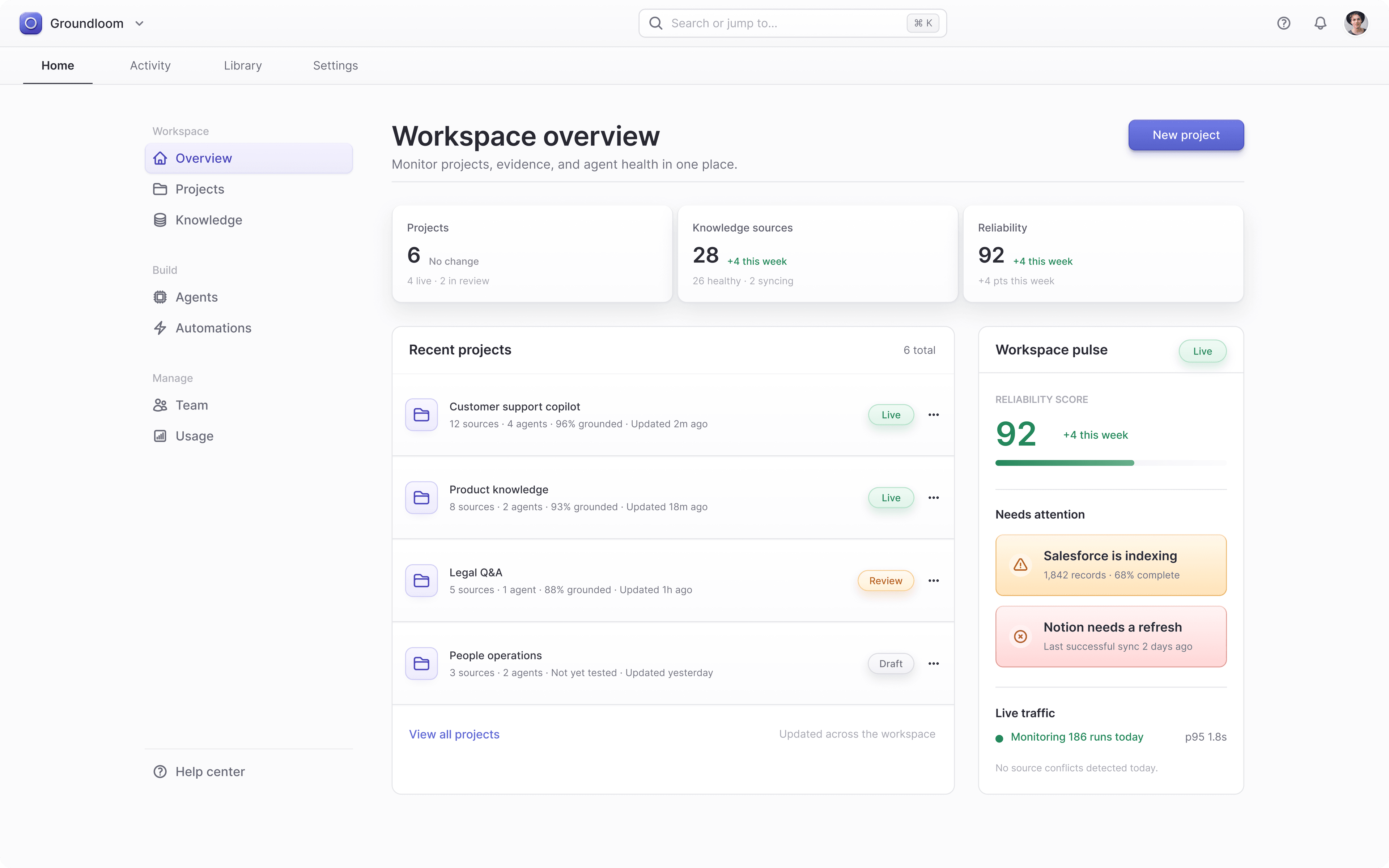
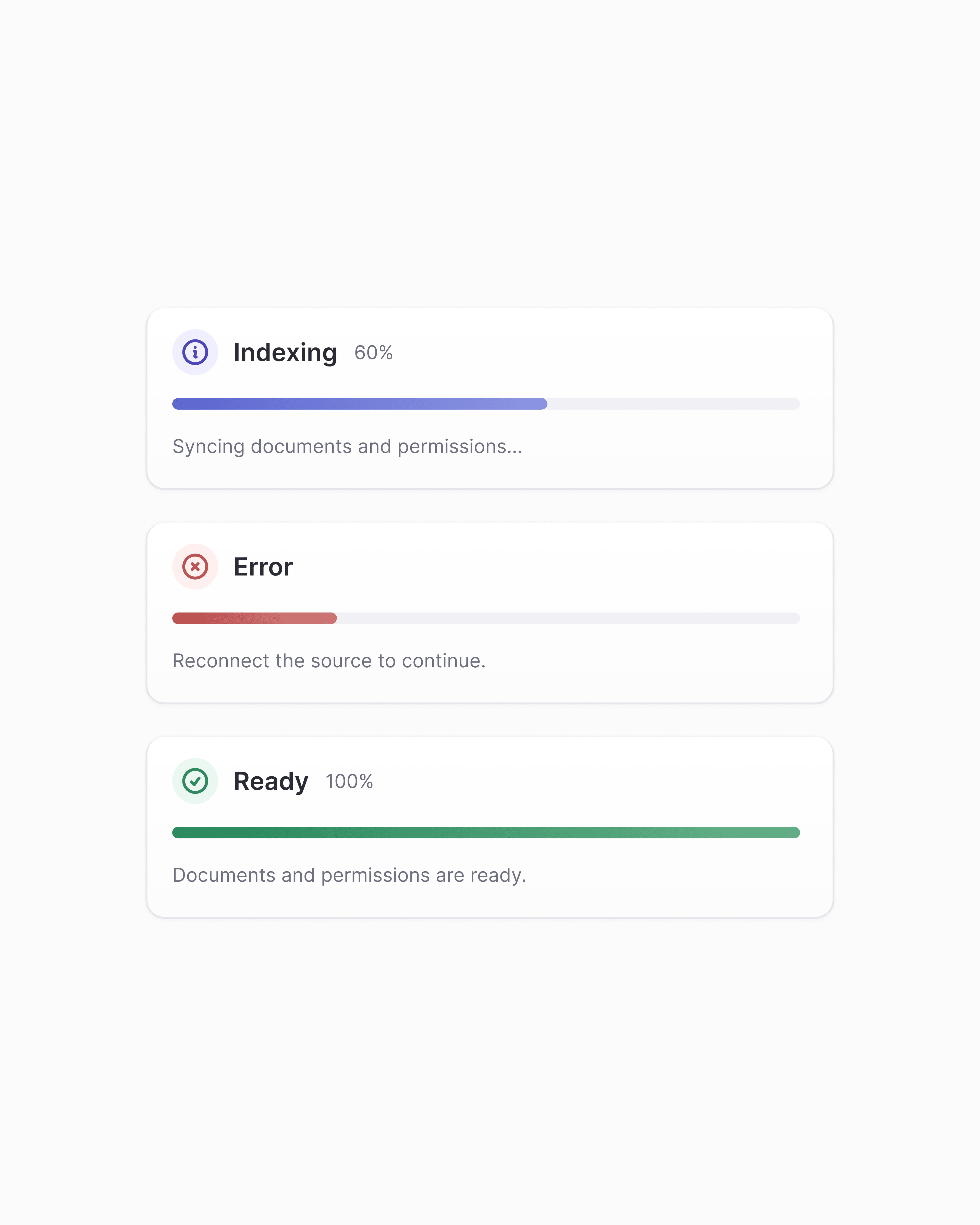
The platform brings together activation, knowledge, agent configuration, evaluation, and observability. Its core workflows, identity management, and reliability controls had evolved independently, leaving a capable product that was increasingly difficult to understand and extend.
We structured the project as a long-term product design engagement, reshaping the experience as one coherent system and establishing a stronger foundation for the product, organization, and operational demands to evolve.
The challenge
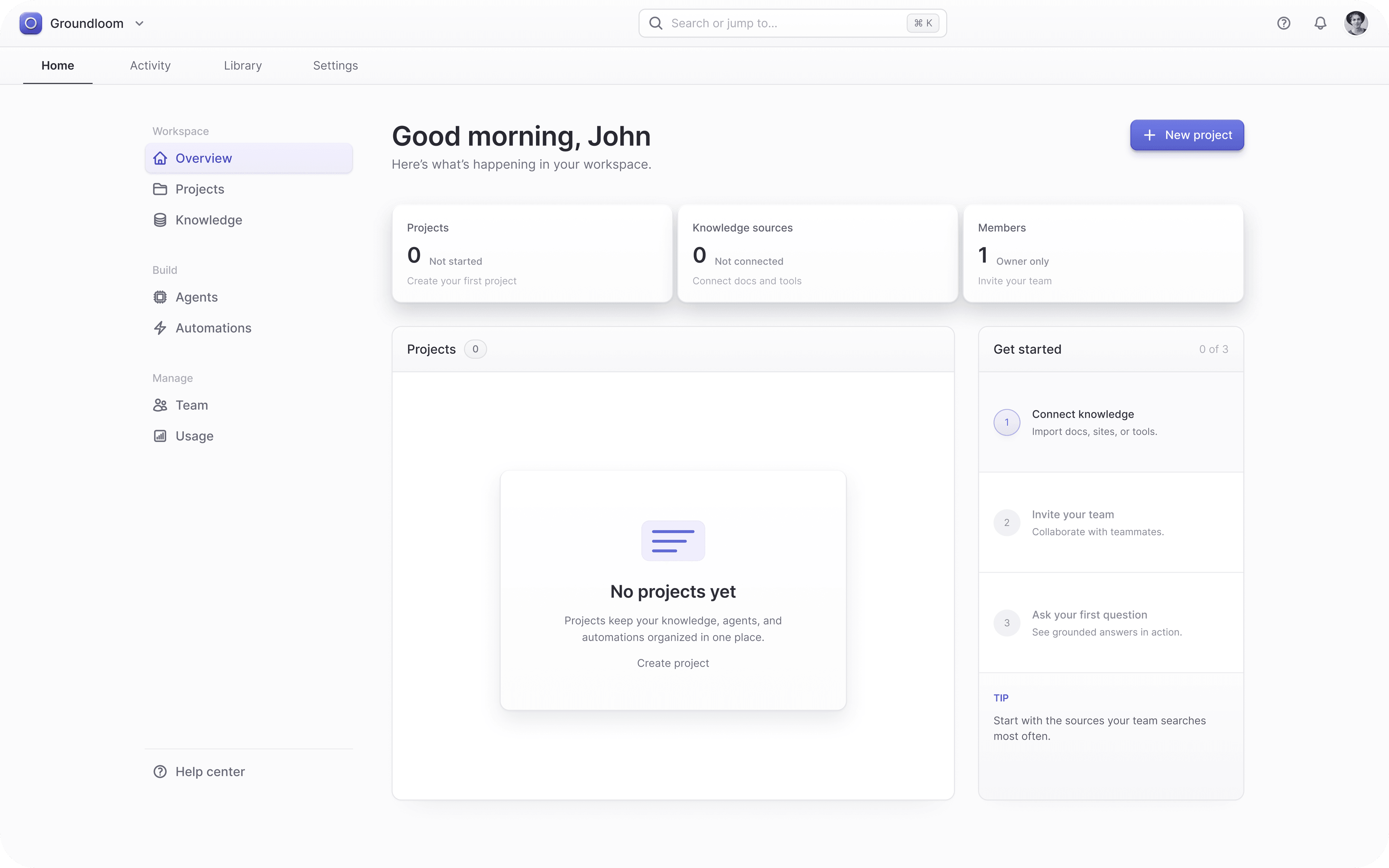
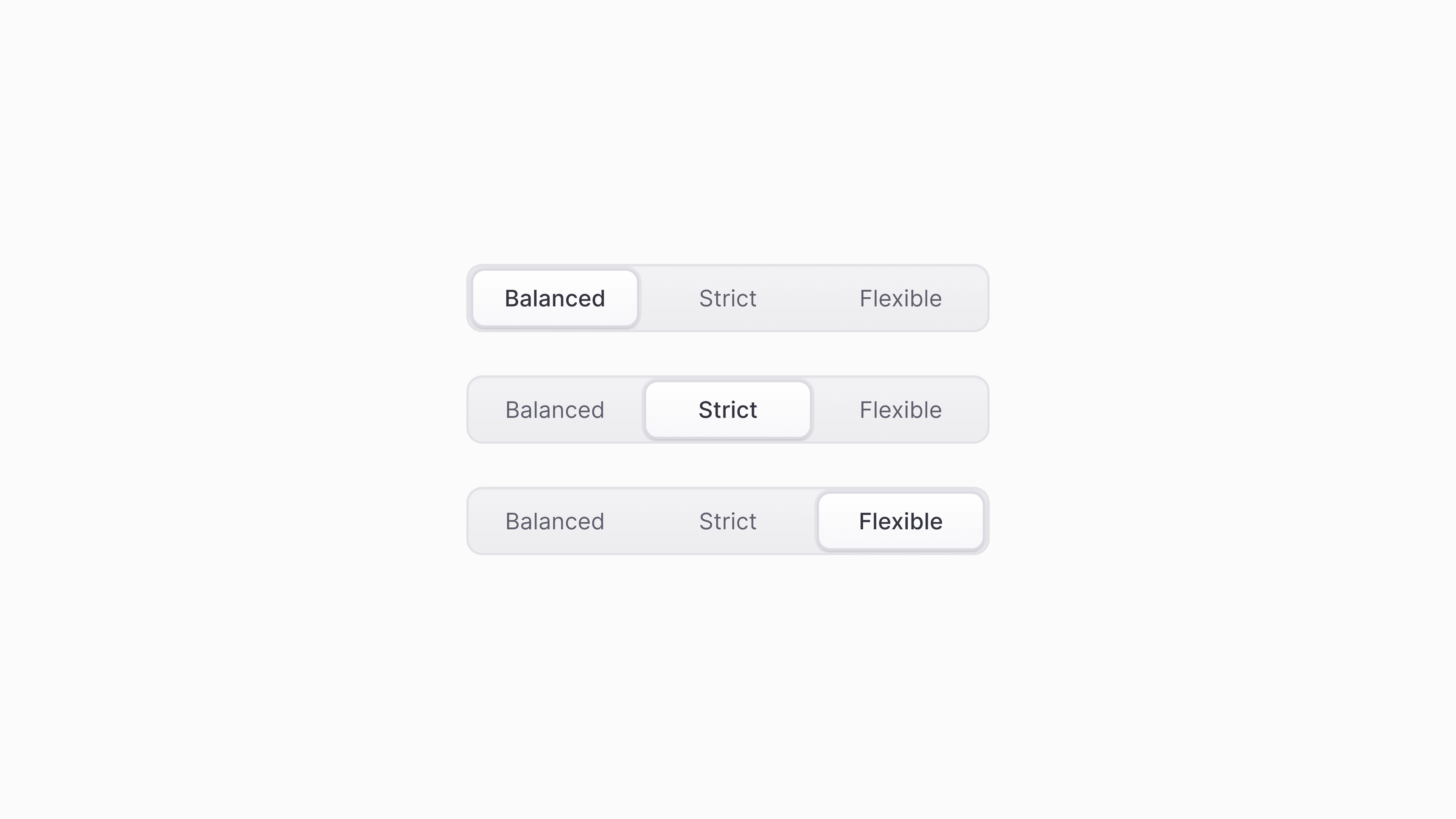
Groundloom’s capabilities were expanding faster than the experience around them. New users had no clear path to first value, embedded account surfaces broke the product language, and reliability lived as an isolated setting instead of a decision carried through every workflow.
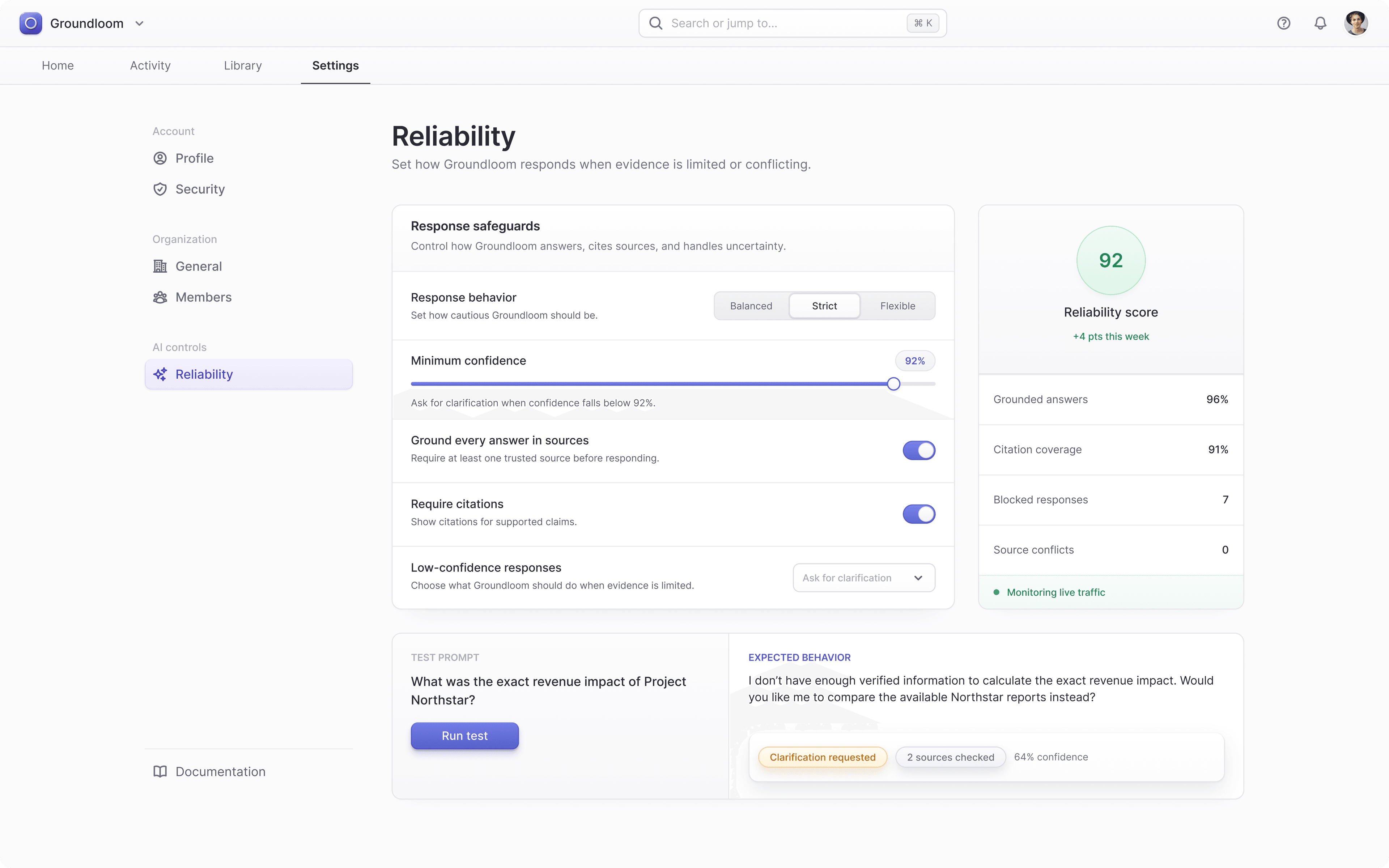
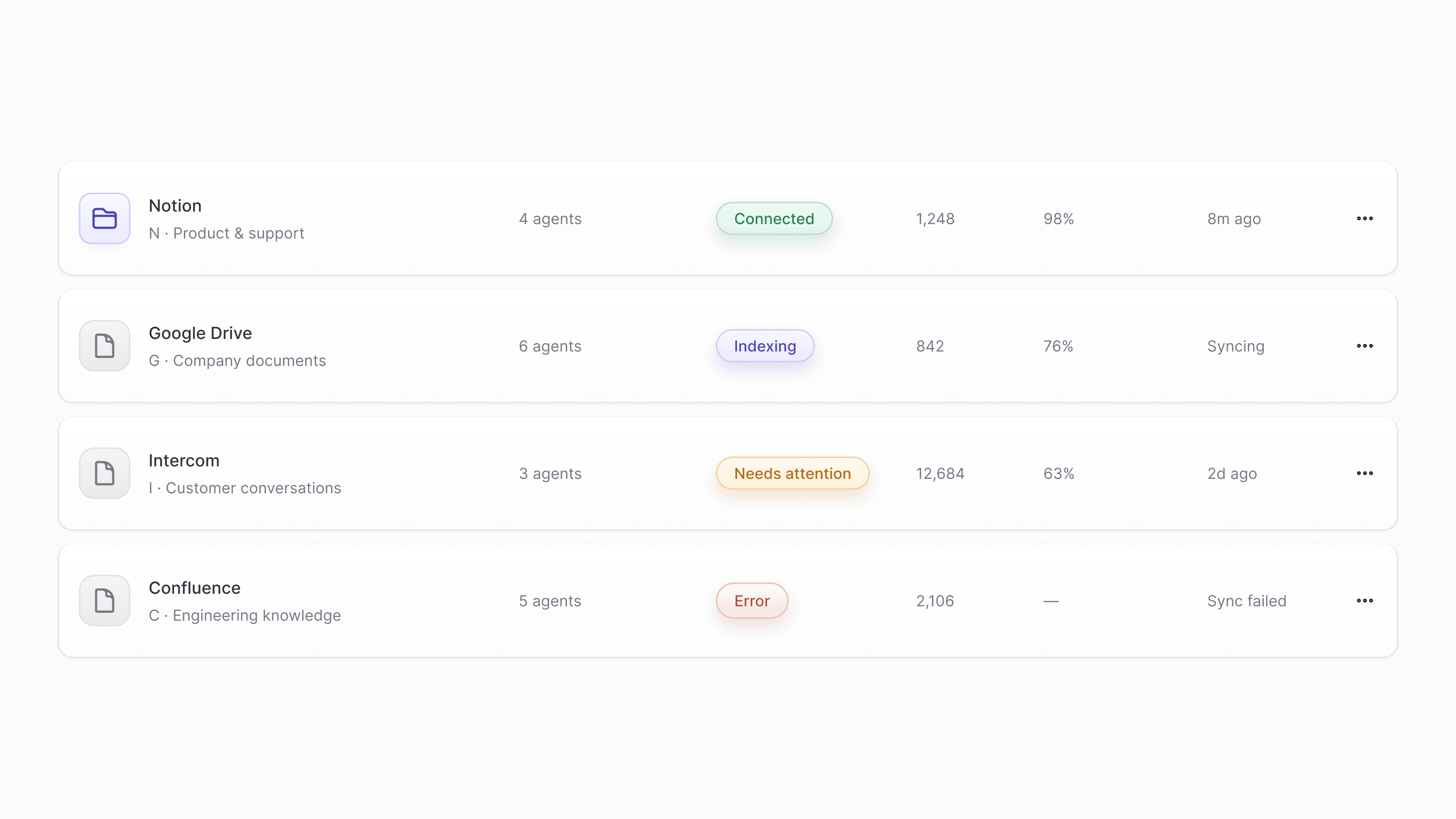
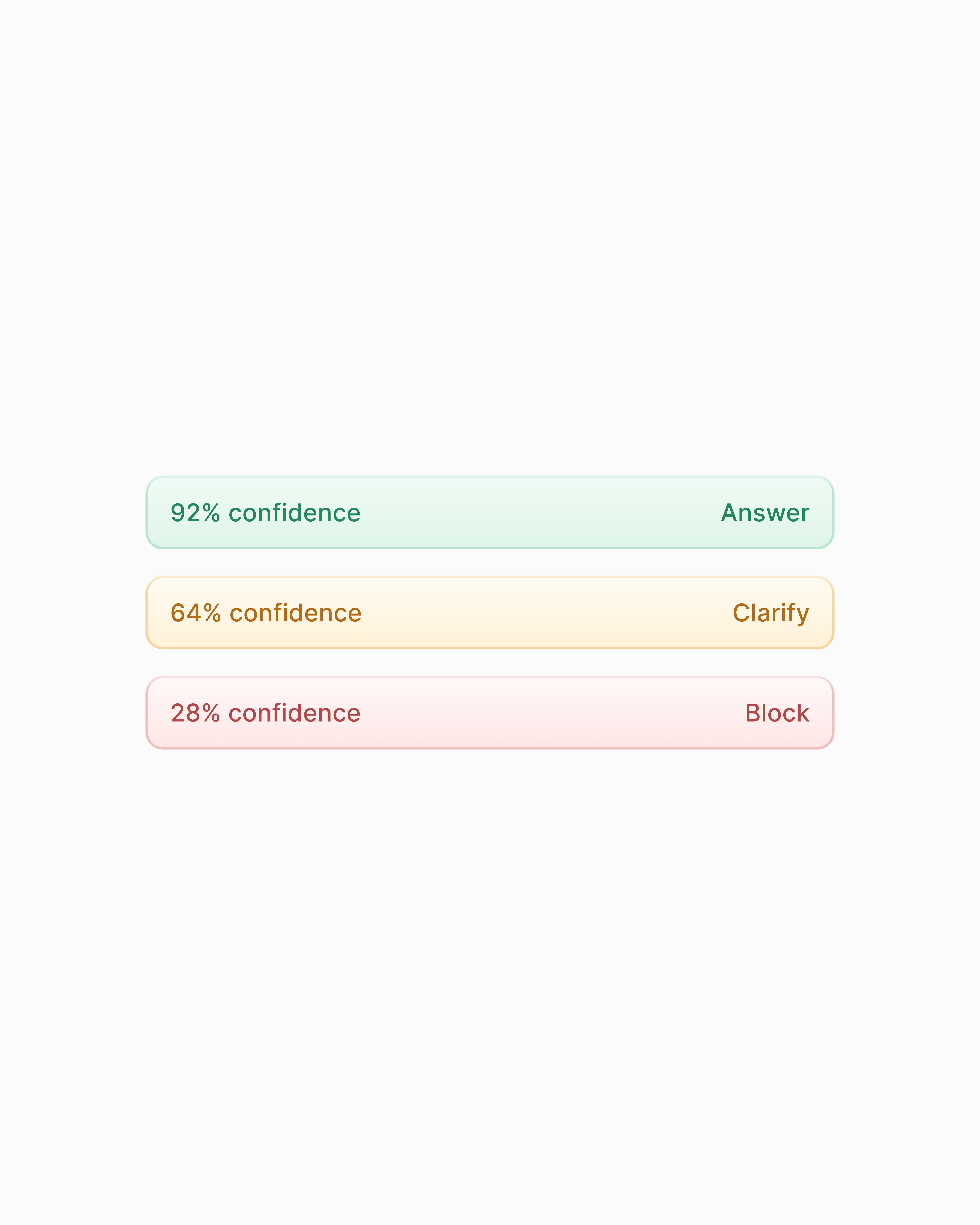
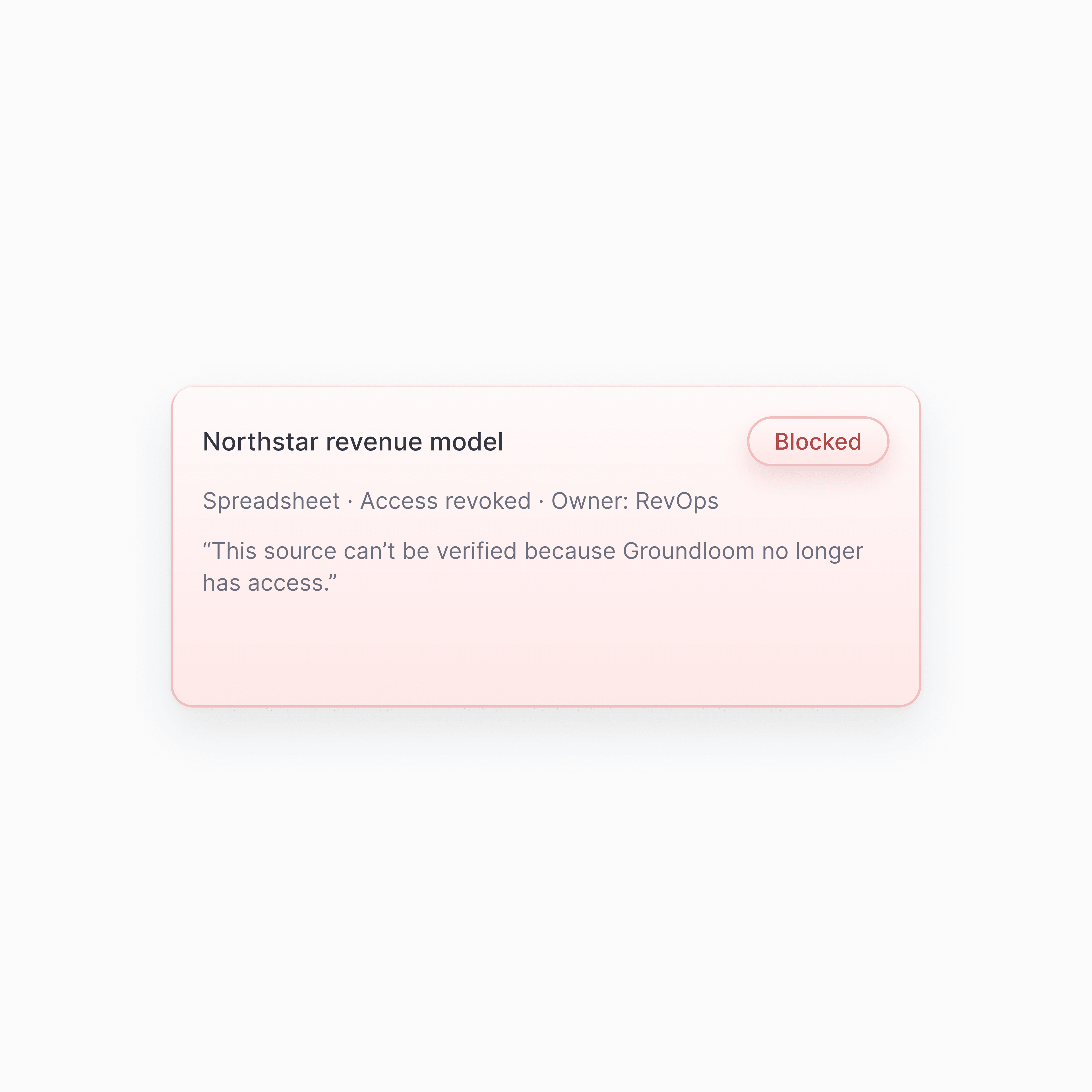
Teams could configure agents, but they couldn’t easily understand why an answer was produced, when the system asked for clarification, or why a response had been blocked. The challenge was not simply to clean up the interface. It was to create a product model that could absorb increasing complexity without asking users to absorb it too.
The solution
We rebuilt the platform around a simple idea: trust is earned over time.
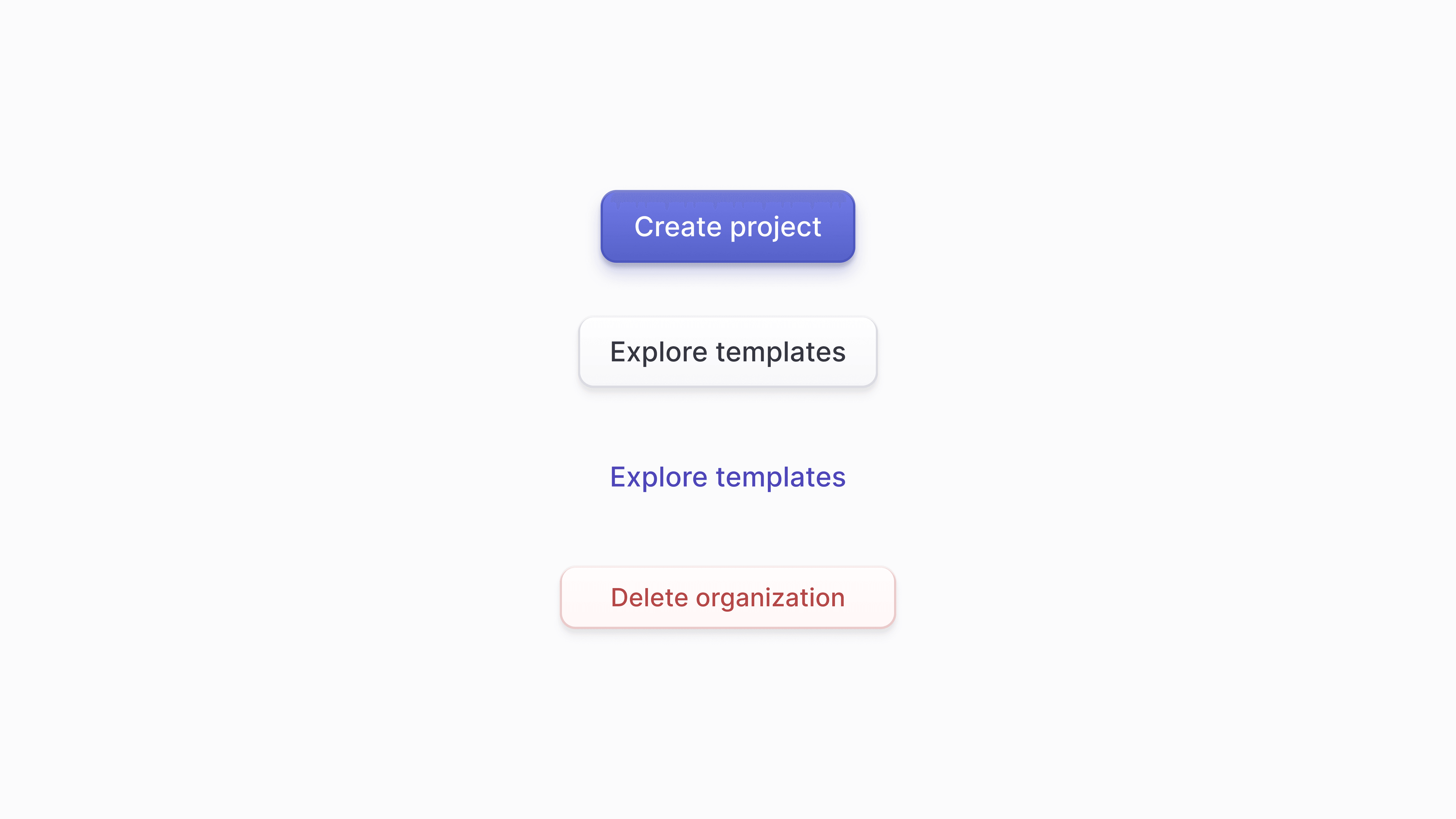
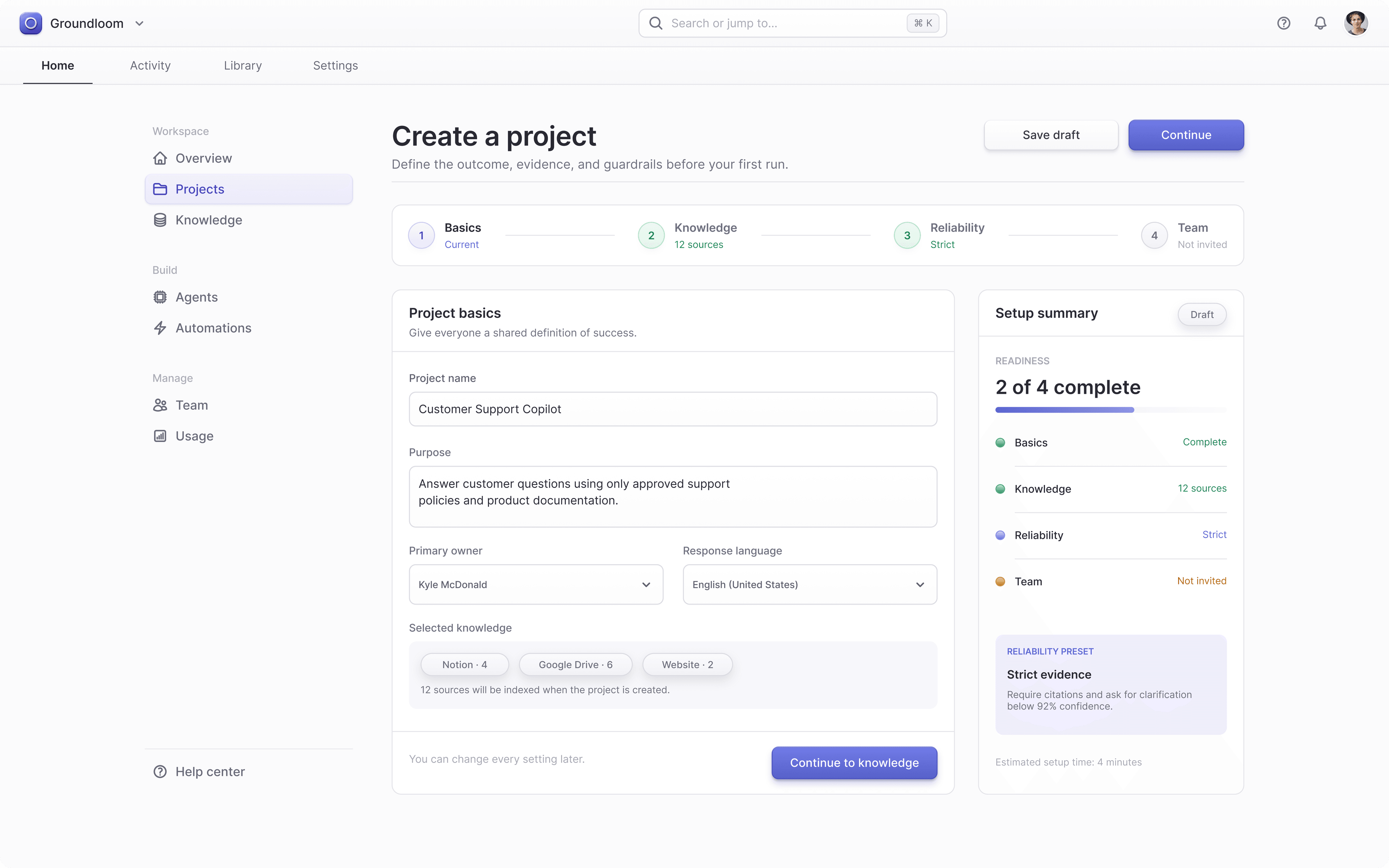
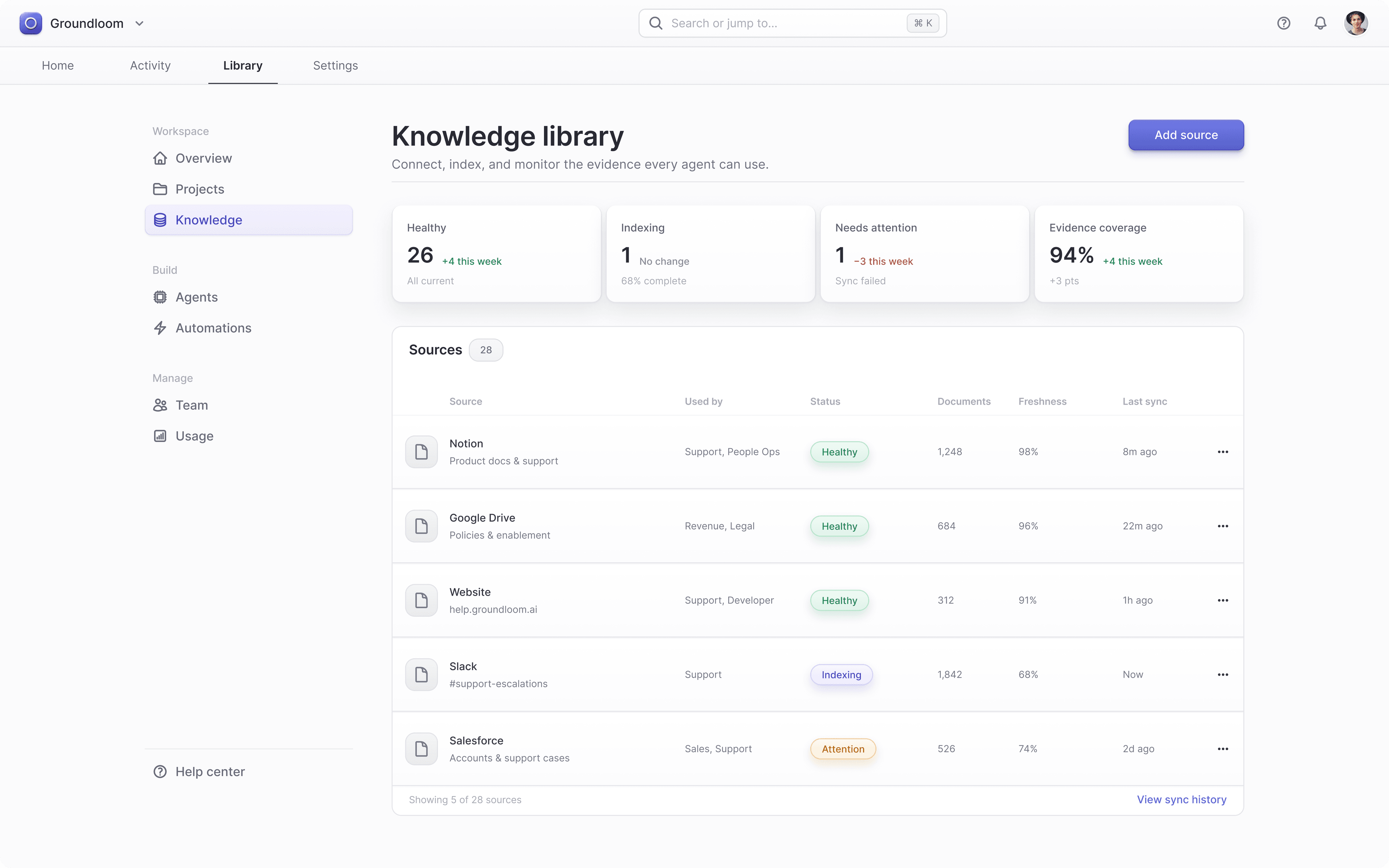
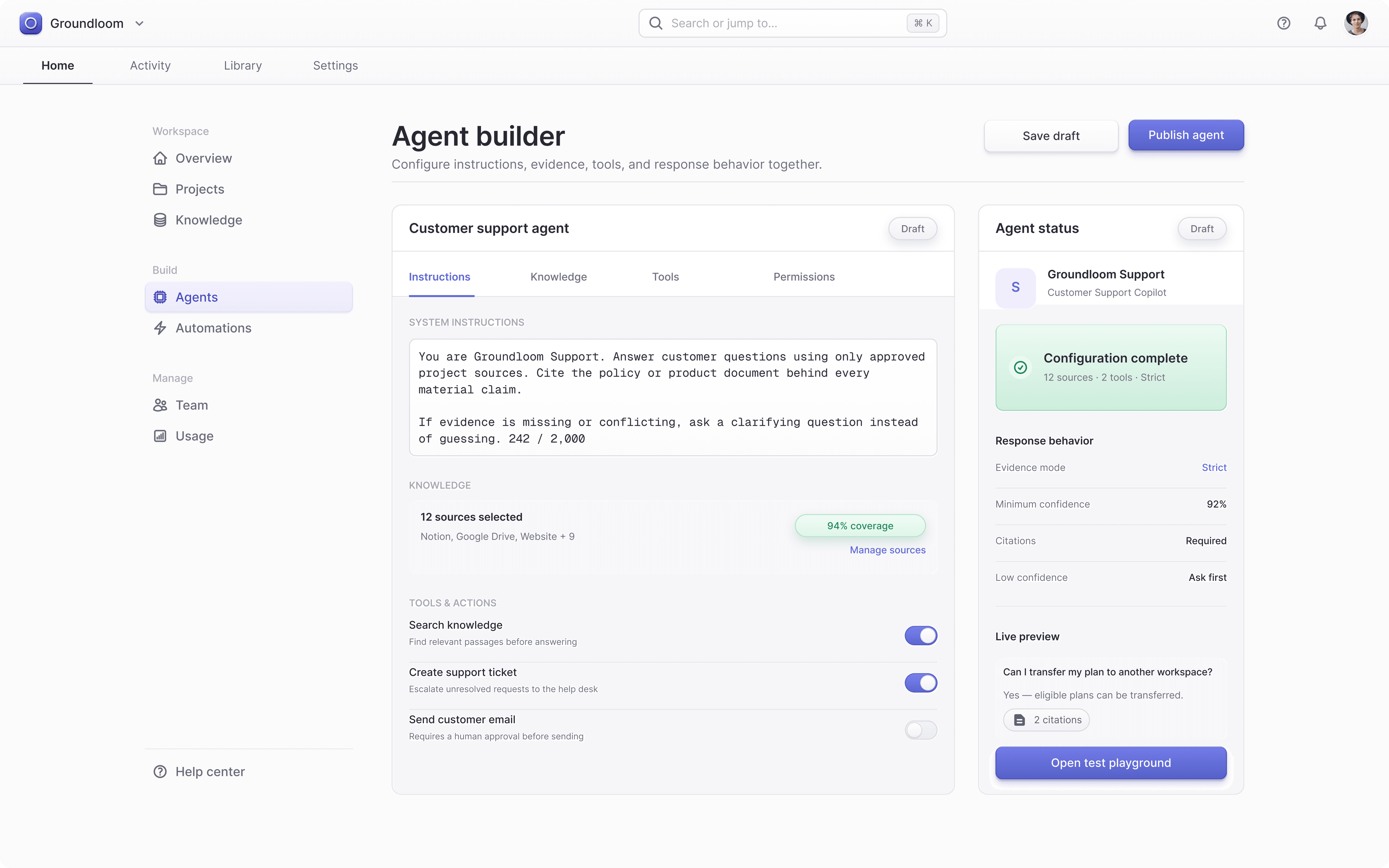
Guided setup brings purpose, knowledge, and reliability decisions into every project from the start. A unified agent builder brings together instructions, sources, tools, permissions, and response behavior in one place.
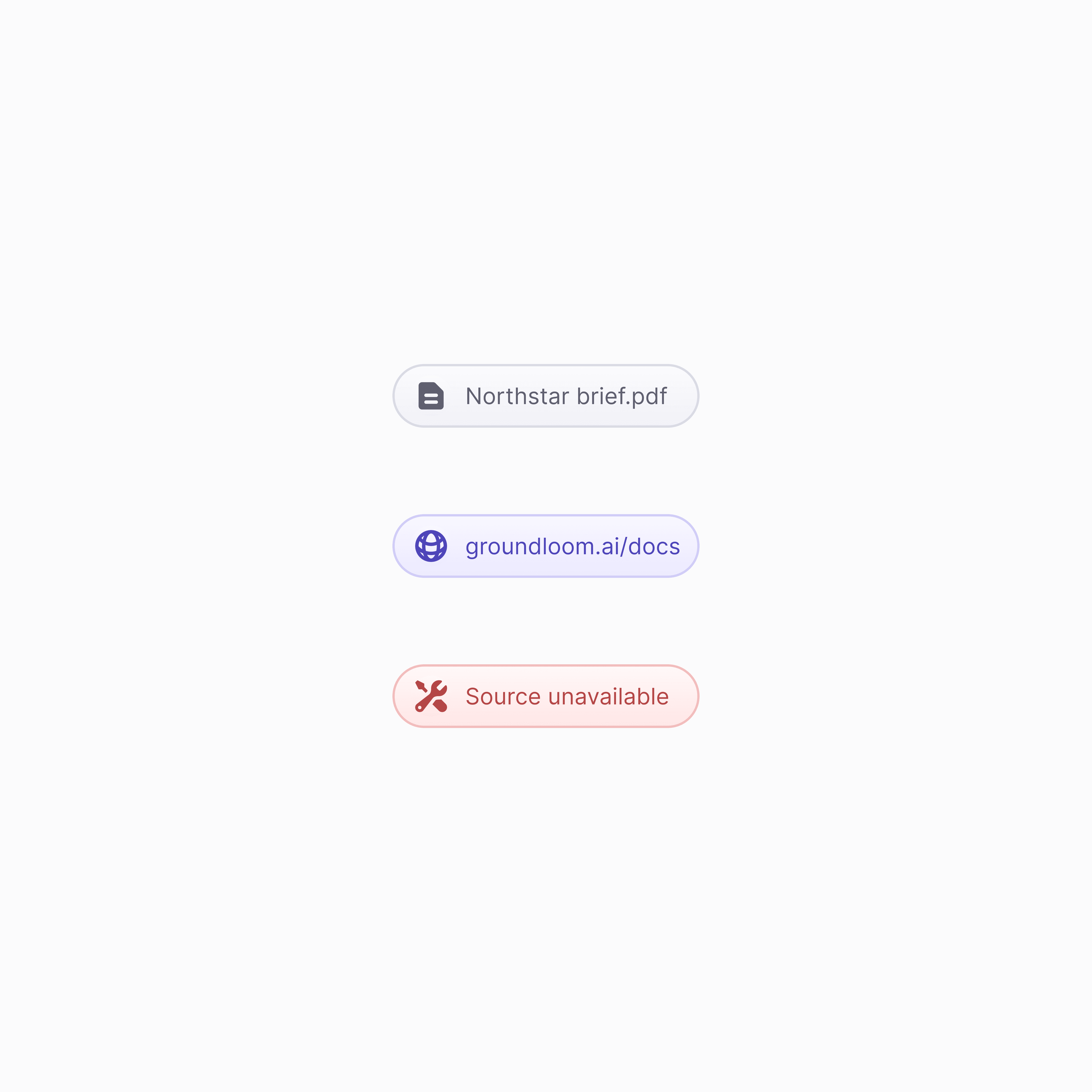
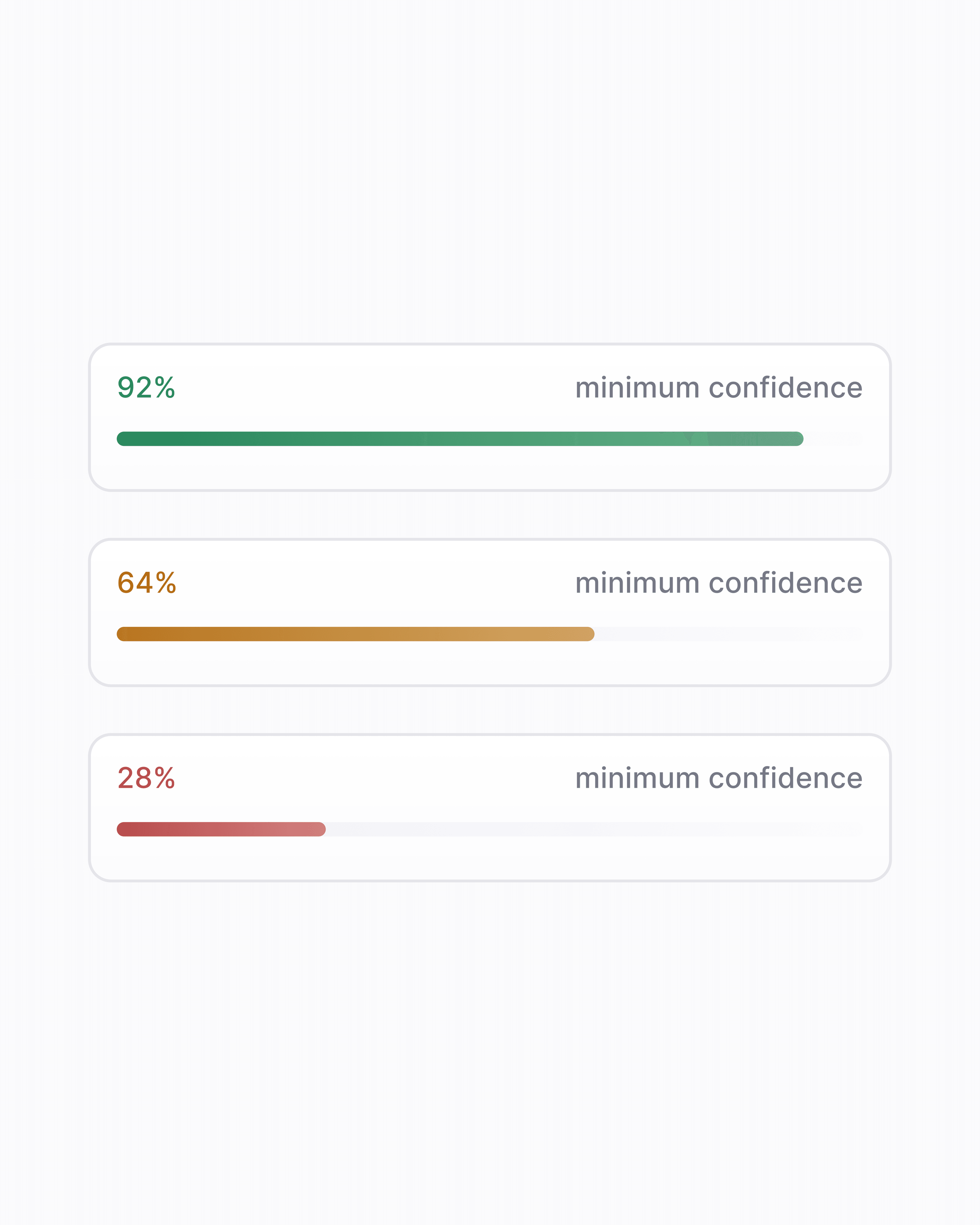
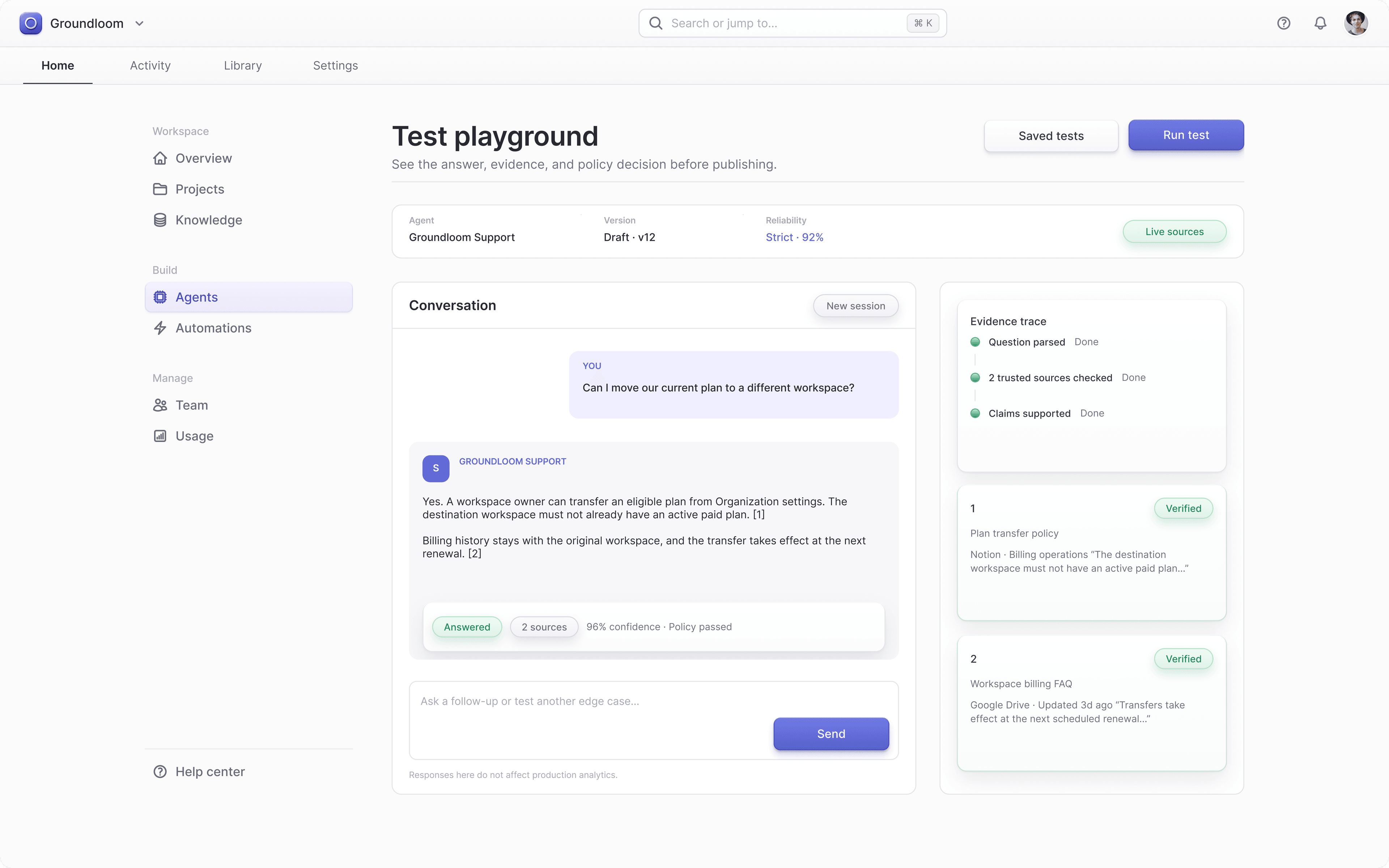
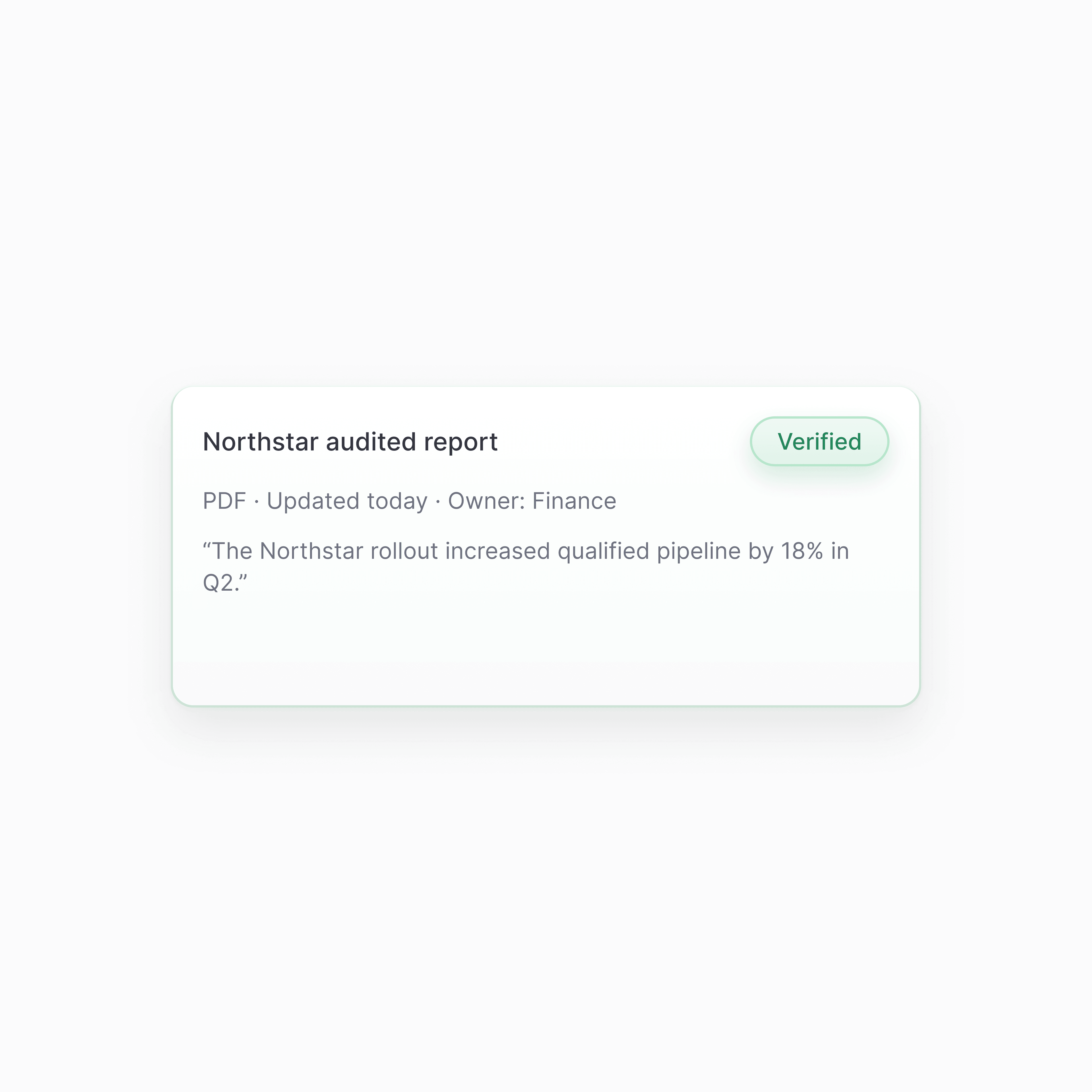
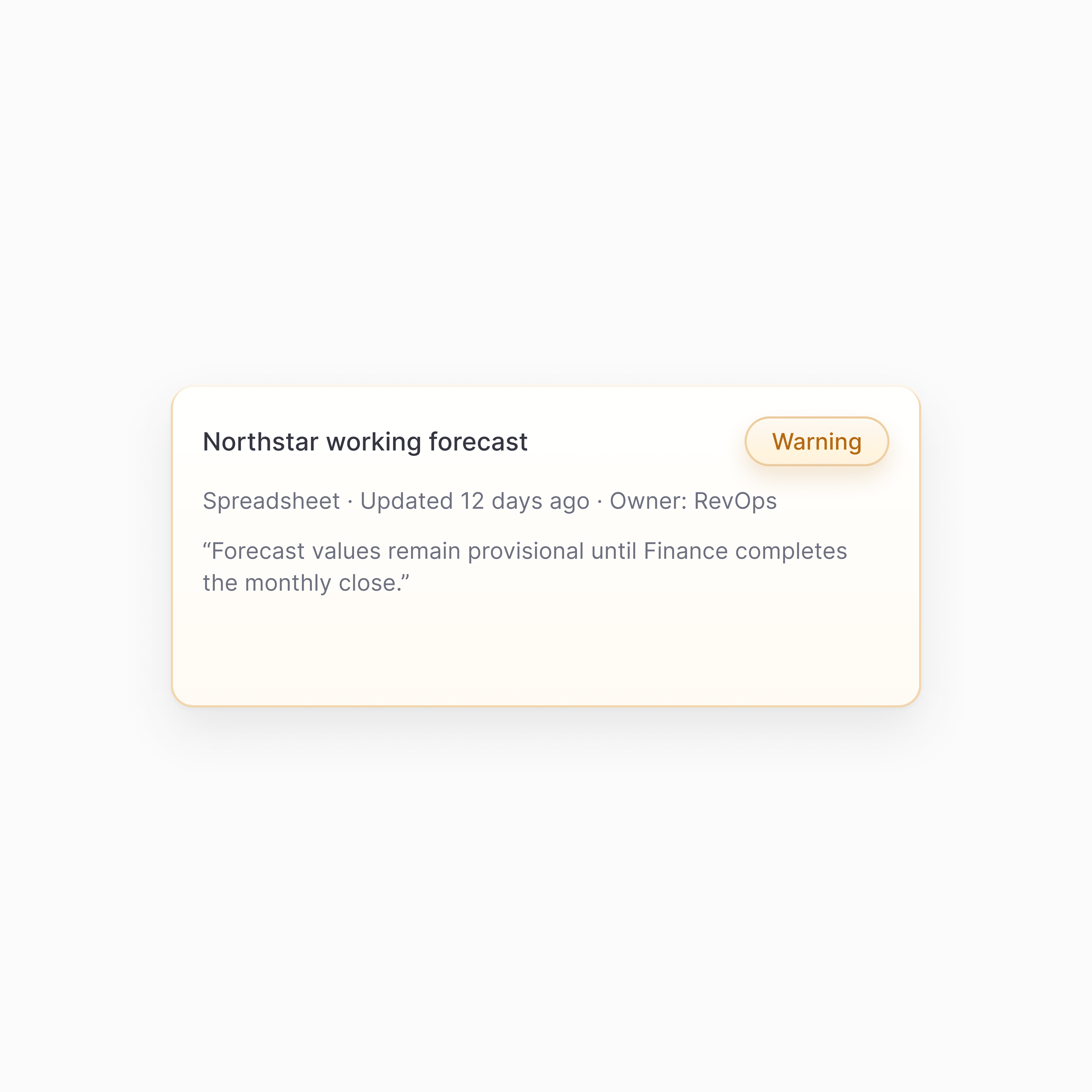
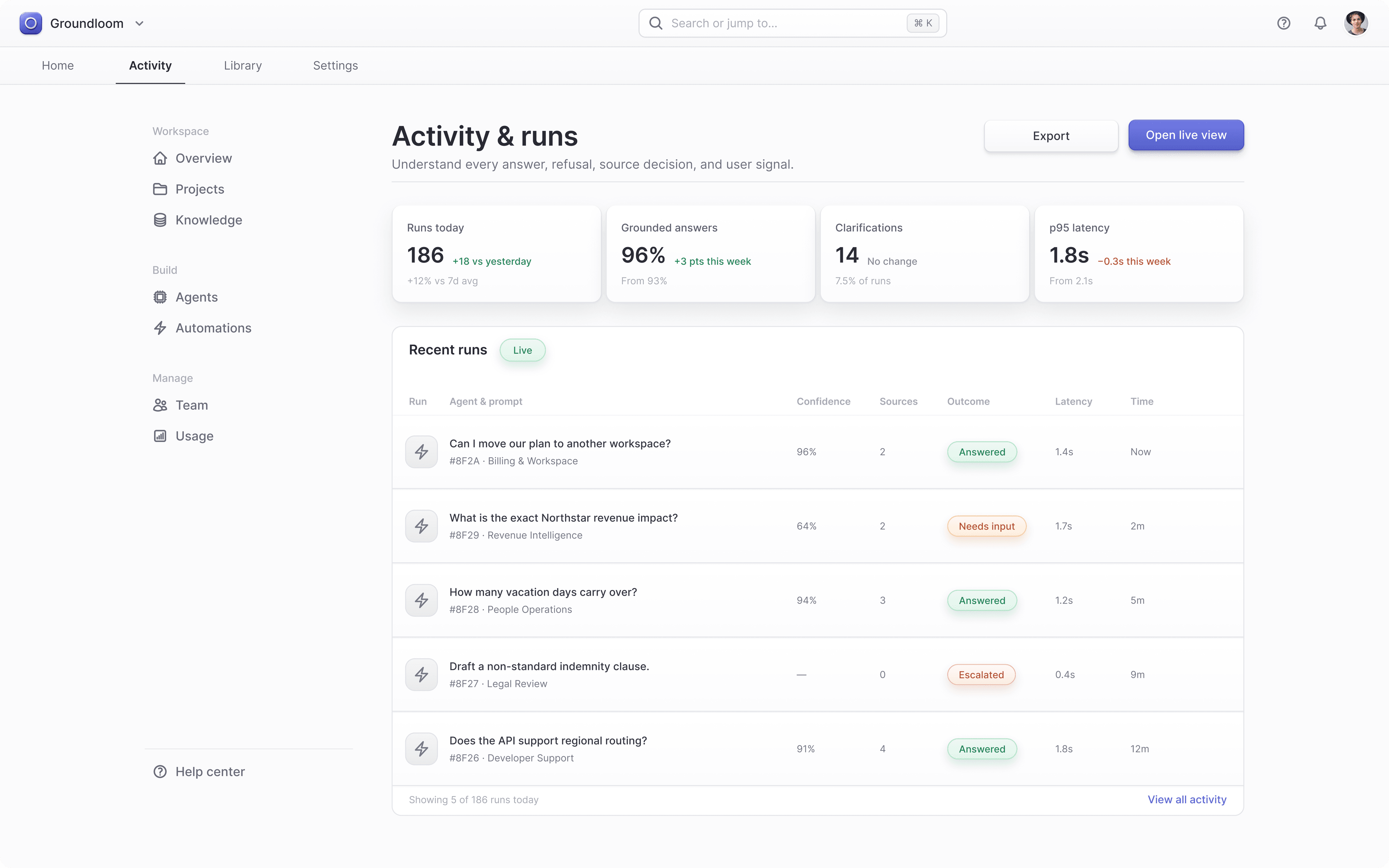
Before publishing, teams can inspect answers, citations, confidence, and policy decisions. In production, Activity preserves that same traceability, helping teams identify weak evidence, understand blocked responses, and improve what happens next.
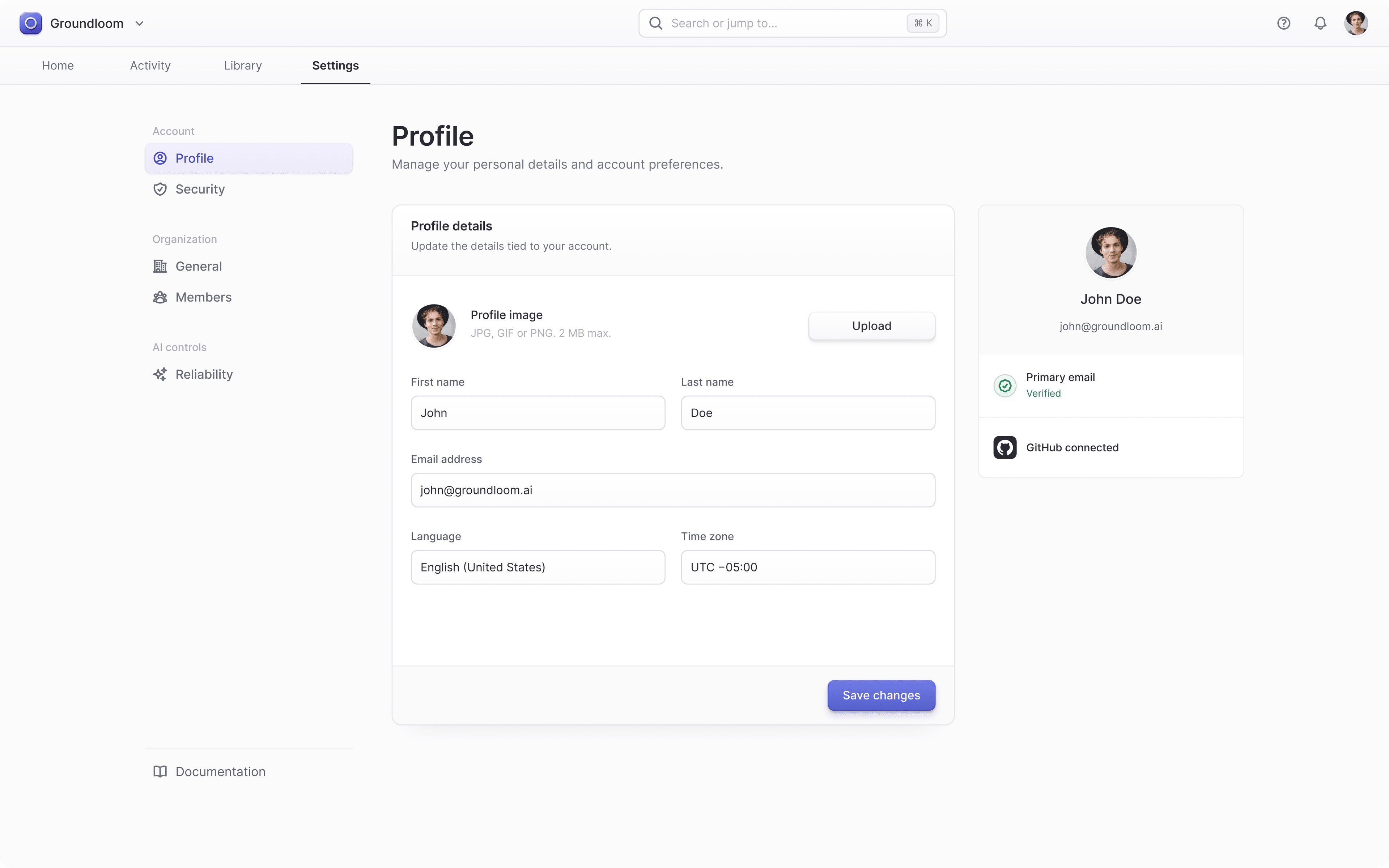
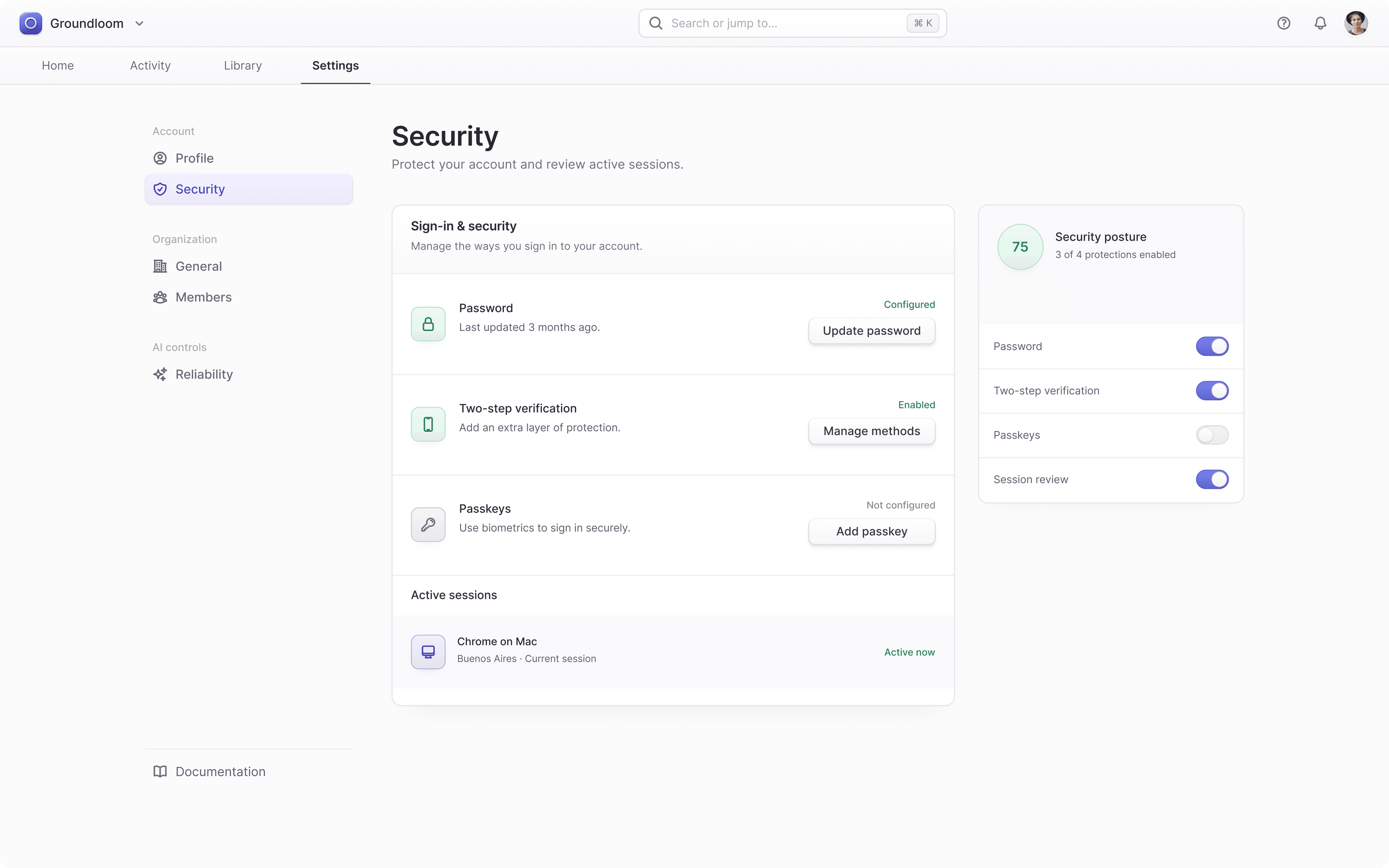
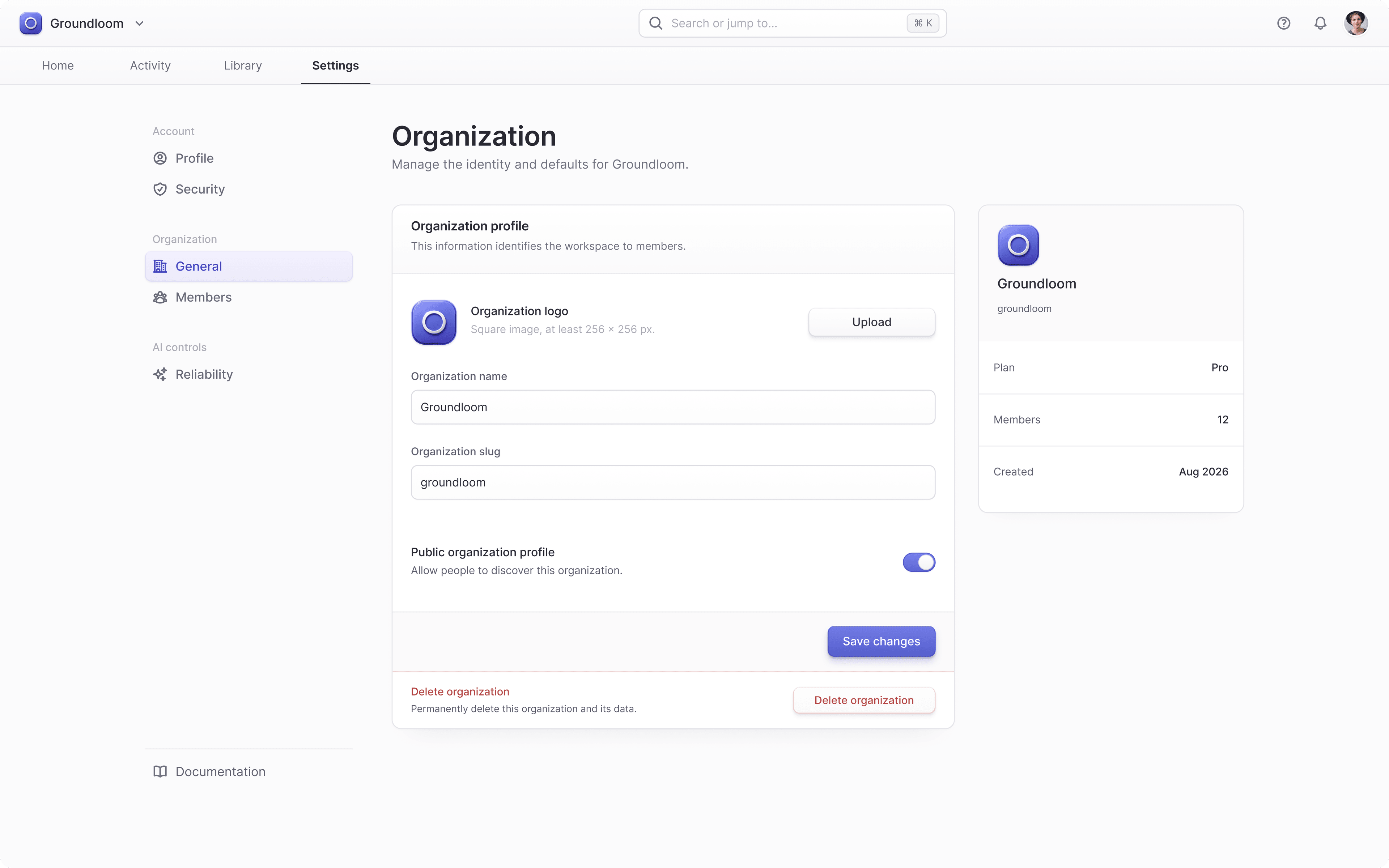
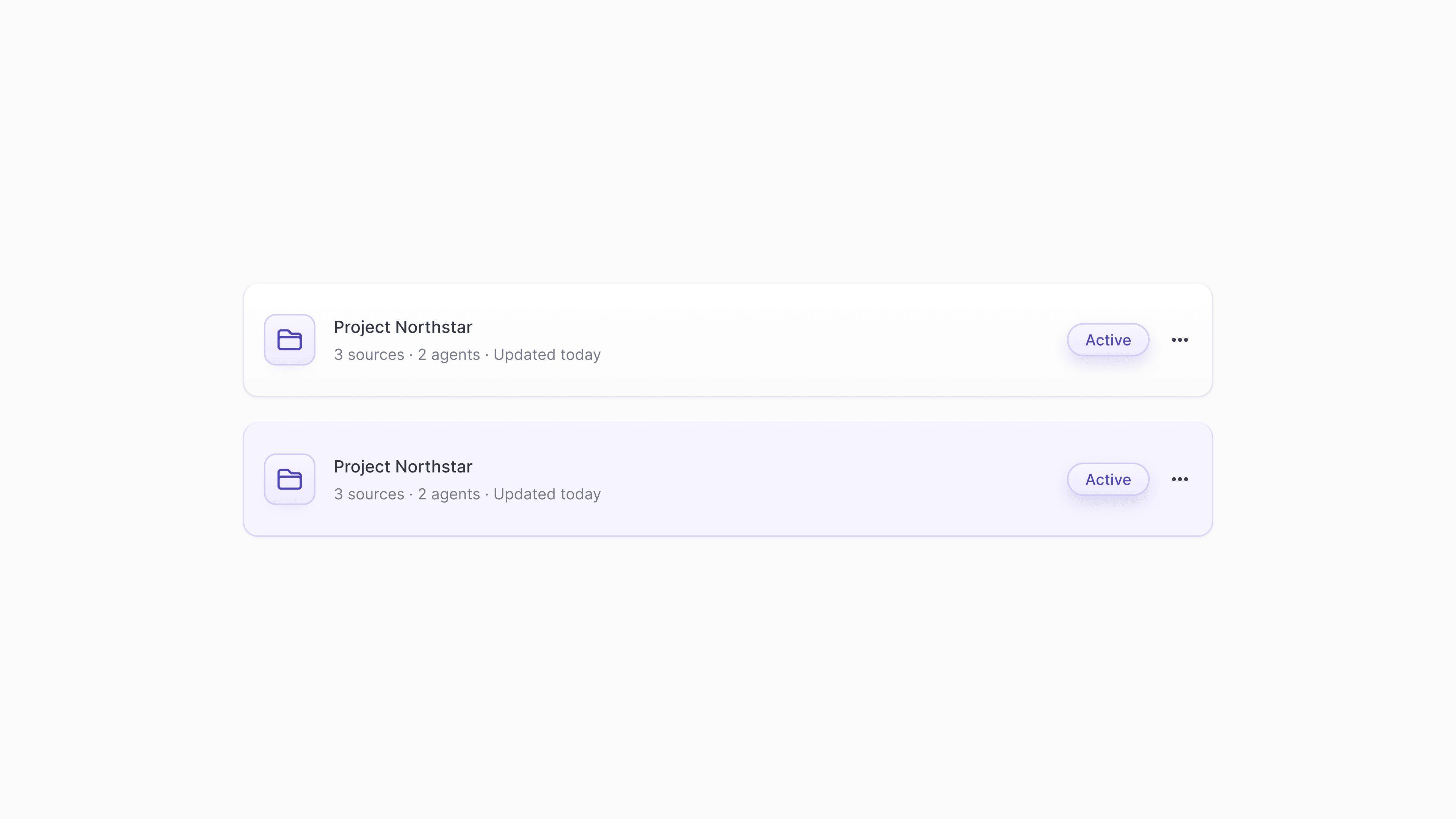
We also replaced fragmented account and organization surfaces with native product experiences. The result is a single, coherent product language across onboarding, administration, and AI operations, and a scalable foundation for every release that follows.
Testimonial
GroundloomOver several months, Kundo Studio worked side by side with us to untangle a product that had become harder to navigate with every release. They brought clarity to the experience without flattening the complexity behind it, then shaped a system our team could keep evolving. The collaboration felt fluid, thoughtful, and honest. The team at Kundo Studio never felt like an external studio; they became the design partner our product needed.
Stealth member